
A narrowing window for the listing
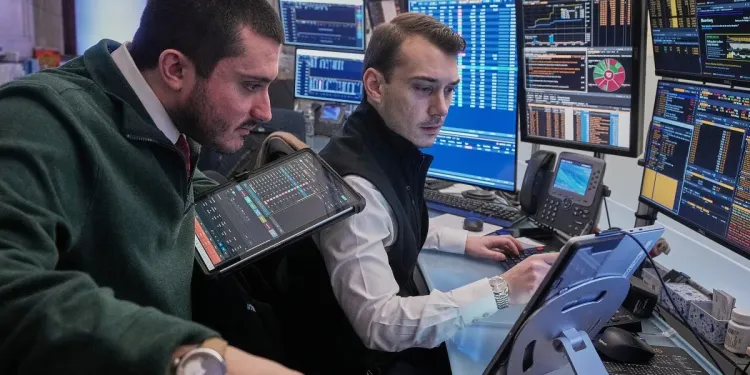
Democrats captured both chambers of Congress in the November 3 election. Stocks initially advanced, but by early afternoon on Thursday, November 5, the Nasdaq was down about 5%. Nvidia fell 7.5%, AMD lost 14.6% and CoreWeave dropped 12.1%, as investors worried that the incoming Congress could impede data center construction.
The possibility of an election-driven decline had been on Wall Street's radar. Bank of America strategist Michael Hartnett had warned that a Democratic sweep could knock 10% off US stocks because of the risks facing AI companies.
After Thursday's rout, Vital Knowledge analyst Adam Crisafulli told clients that the severity of the selling could postpone Anthropic's listing. The company filed its SEC registration statement on October 26, seeking to trade on Nasdaq under the ticker ANT.
Kalshi traders also lowered their expectations on November 5. The implied probability of an IPO by November 30 slid from 84% to 60% in one day; for a listing by December 31, it fell from 90% to 74%. Monday, November 16, was the earliest possible trading date, leaving a limited window before Thanksgiving on November 26.
A November offering would give Anthropic access to public-market funding before the new Congress takes office in January. A delay could leave the company seeking its next opening under tougher rules.
The valuation reset predates the election
Anthropic's pricing ambitions were already under pressure in October. Reports pointed to a possible reduction in its target valuation from $2 trillion to roughly $1.5 trillion, reflecting slower revenue growth and concerns about an AI bubble. Investors discussed the $1.5 trillion level at an October 14 event in San Francisco, and The Wall Street Journal subsequently reported that some institutional investors favored $1.5 trillion to $1.6 trillion.
Even the lower target would substantially exceed Anthropic's latest private valuation of $965 billion, according to Empower's The Currency. The same publication identified the benchmark for a record offering: SpaceX's June 2026 IPO raised $85.7 billion and valued that company at approximately $1.77 trillion.
Anthropic's November 2 amended filing illustrated why investors were scrutinizing the pace of growth despite enormous revenue gains. Third-quarter revenue reached roughly $17 billion, about 1,127% above a year earlier. But sequential growth slowed to 47%, compared with 144% in the second quarter and 132% in the first, according to Data Center Dynamics.
The company's losses and spending were also substantial. It reported a third-quarter net loss of $23.29 billion. Compute and infrastructure expenses for the nine months through September 30 totaled $14.4 billion, a 329% year-over-year increase.
Data center opposition becomes a policy risk
The election added a political threat to an infrastructure expansion that had already become a campaign issue. The Trump administration supported the data center build-out, while Democrats and some Republicans responded to local opposition to the facilities and to AI more broadly.
The CNBC Voter Poll found that 56% of voters considered AI and data centers a crucial or major factor in their voting decision. Among that group, 65% said they voted for a Democratic congressional candidate.
After the election, Senator Bernie Sanders called for an immediate national moratorium on data centers. Representative Yassamin Ansari said a pause in AI development should be a Day 1 priority for the House Democratic majority, CNBC reported.
State policy could also affect a large share of planned construction. Wells Fargo estimates that Texas accounts for 27% of planned US data center capacity. Texas Governor-elect Gina Hinojosa campaigned on halting all data center approvals until the legislature enacts protections for Texans.
Anthropic's infrastructure exposure
For Anthropic, restrictions on construction or higher electricity costs could complicate roughly $895 billion in disclosed compute and infrastructure commitments. Frontier AI development depends on computing resources that require land, electricity and permits. The company's S-1 lists the "evolving and uncertain regulatory and political environment" among its risks.
Anthropic is expected to have more than 3.5 gigawatts of compute capacity in 2026, with a similar amount due in 2027, according to a New York Times report cited by Data Center Dynamics.
Its commitments include $121.3 billion for compute leased from Google, $120.5 billion from SpaceX, $110 billion from Amazon and $44.9 billion from Microsoft. The Google, Amazon and Microsoft agreements are mostly non-cancelable, with payments required regardless of usage. The SpaceX agreement allows cancellation with 90 days' notice starting in March.
Implications for Claude users and OpenAI
A change in the IPO schedule does not itself mean Claude's API will go away. For developers, the more relevant questions concern pricing and capacity. A lower valuation or smaller fundraising total could increase pressure to demonstrate margins, potentially affecting token prices and rate limits. New federal or state data center rules could also influence available capacity and the pace of model releases.
Anthropic's market debut is also expected to help set expectations for OpenAI's own IPO, anticipated early next year. OpenAI is raising about $30 billion at a $1.25 trillion valuation, below its earlier $1.5 trillion goal, according to Yahoo Finance and The Motley Fool. While the company is targeting a 2027 listing, CEO Sam Altman has told employees that now is not the right time to go public.