Local agencies take a cautious approach
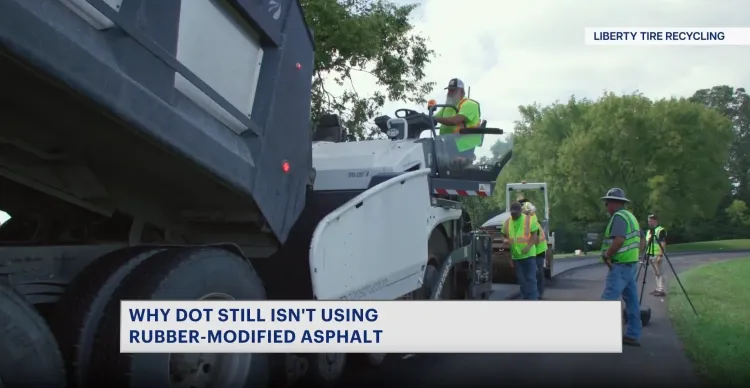
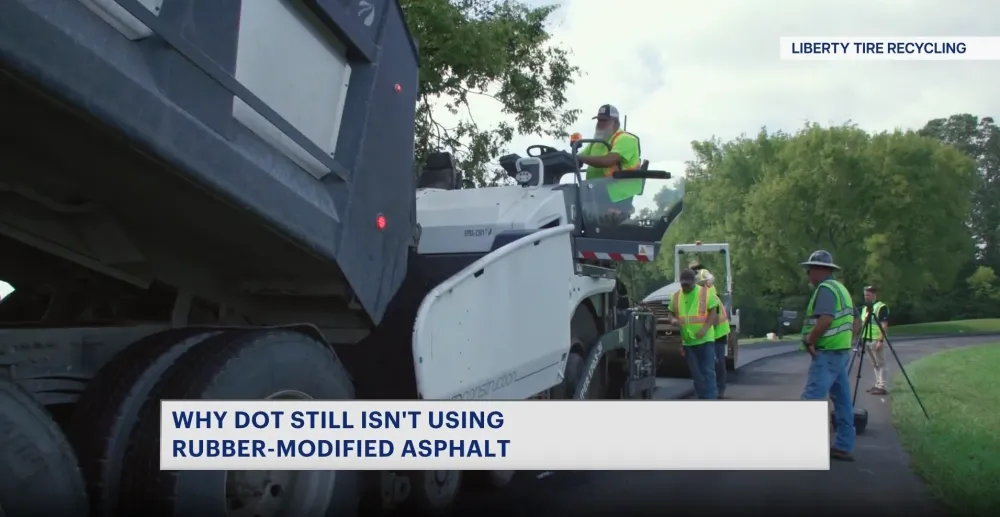
Rubber-modified asphalt incorporates recycled tire rubber into the binder that holds asphalt together. California and Arizona have used it extensively, and more recent projects have brought it to New Jersey and New York City. Its use remains limited across the tri-state area, where road crews routinely repair potholes and deteriorating pavement.
The New York State Department of Transportation says it considers availability, traffic demands and environmental factors when choosing paving materials. A spokesperson said, "NYSDOT does allow the use of performance grade rubber modified asphalt but it has not been utilized in recent years."
Connecticut's transportation department points to both expense and practical limitations. "These mixtures come at a high cost, are a challenge to produce, and have notable performance limitations, especially on high-traffic highways," a spokesperson said. The agency considers rubberized asphalt mixtures unsuitable for widespread use, but it does use recycled tire material in asphalt-rubber chip seals, mainly on lower-volume roads.
New York also has an earlier experimental record. A Times of India account, citing an FHWA guide and a state progress report, describes two test roads paved in summer 1989 under a 1987 legislative directive. The projects used the dry process to place roughly 1.5-inch overlays, with test sections containing 1%, 2% and 3% rubber. After three years, NYSDOT judged neither project economical nor successful.
There is no current federal requirement for states to use crumb rubber in asphalt paving, according to the Federal Highway Administration. The 1991 Intermodal Surface Transportation Efficiency Act imposed specified usage quantities, but Section 205(b) of the NHS Designation Act eliminated that mandate and its penalties in 1995.
The case for flexibility and quieter roads
Manufacturers and advocates say adding processed tire rubber can make pavement more durable and quieter, with a service life as much as 40% longer than traditional asphalt. Their explanation centers on flexibility: rubber can absorb traffic loads, compress and then recover, helping resist the cracks and potholes that develop as roads age.
"Rubber-modified roads, no matter the usage, are going to last longer," said Stratton Kirton of Liberty Tire Recycling. He described how the material responds to heavy vehicles: "When a heavy truck drives over it, it depresses it," Kirton said. "In this case, you have rubber mixed in and that rubber takes that weight. It compresses but it also bounces back, and that's what really protects the road."
CalRecycle reports that studies have measured road-noise reductions of 2 to 3 decibels, described as up to a 50% reduction, at locations with speeds above 35 mph. It also cites a study in which a rubberized asphalt concrete overlay retained about a 5-decibel reduction after several years, compared with 2.2 decibels for a conventional overlay. The agency says the noise benefit is smaller on roads with speed limits below 35 mph or high truck volumes.
Advocates also point to the reuse of discarded tires that might otherwise go to landfills. California's experience provides a measure of that reuse: Caltrans estimates that its crumb-rubber paving materials diverted 2.42 million waste tires from landfills and stockpiles in 2023.
California's results show performance and cost differences
A study cited in Caltrans's 2023 Crumb Rubber Report found that rubberized hot mix asphalt performed as well as or better than conventional hot mix asphalt across California. The results depended on traffic loading, pavement-layer thickness, the condition of the existing pavement and geographic location.
The report, prepared in 2024, also documents a price premium that varied by project category. Across all categories in calendar year 2023, paving material containing crumb rubber cost an average of $27.32 more per metric ton than conventional asphalt, a 24.23% difference. For pavement preservation maintenance projects, it was 5.89% cheaper; for capital preventive maintenance projects, it was 34.76% more expensive.
Of the 2.76 million metric tons of paving asphalt Caltrans used that year, about 0.89 million metric tons, or 32.2%, contained crumb rubber. Even at that scale, the agency missed its required crumb-rubber usage amount. It was only the third shortfall since the statutory goal was established in 2007.
Atlanta considers expanding its first project
Atlanta first tried rubber-modified asphalt on Ellis Street, a busy route through its downtown tourism district, about a year before the November 2026 report. City transportation commissioner Solomon Caviness said the pavement "held up beautifully" and credited it with reducing road noise and summer heat. Atlanta is exploring wider use.
Drivers interviewed by News 12 said they were open to trying new paving approaches if they improved road conditions and lowered long-term maintenance costs. "I think that would be extremely helpful and better for the environment," said Amanda Langer of Melville.
Edie Karpf of Huntington also welcomed that possibility: "Anything that would save money and improve the roads? Absolutely," Karpf said.